
CASE STUDY
K2 Medical Research
Building a clinical research brand system designed to scale across locations.
K2 Medical Research initially engaged us to develop its corporate identity, but the deeper need turned out to be structural. Rather than replacing the existing logo, we helped extend the brand into a scalable location-based system and multi-location website architecture that could support growth across offices while keeping the parent brand intact.
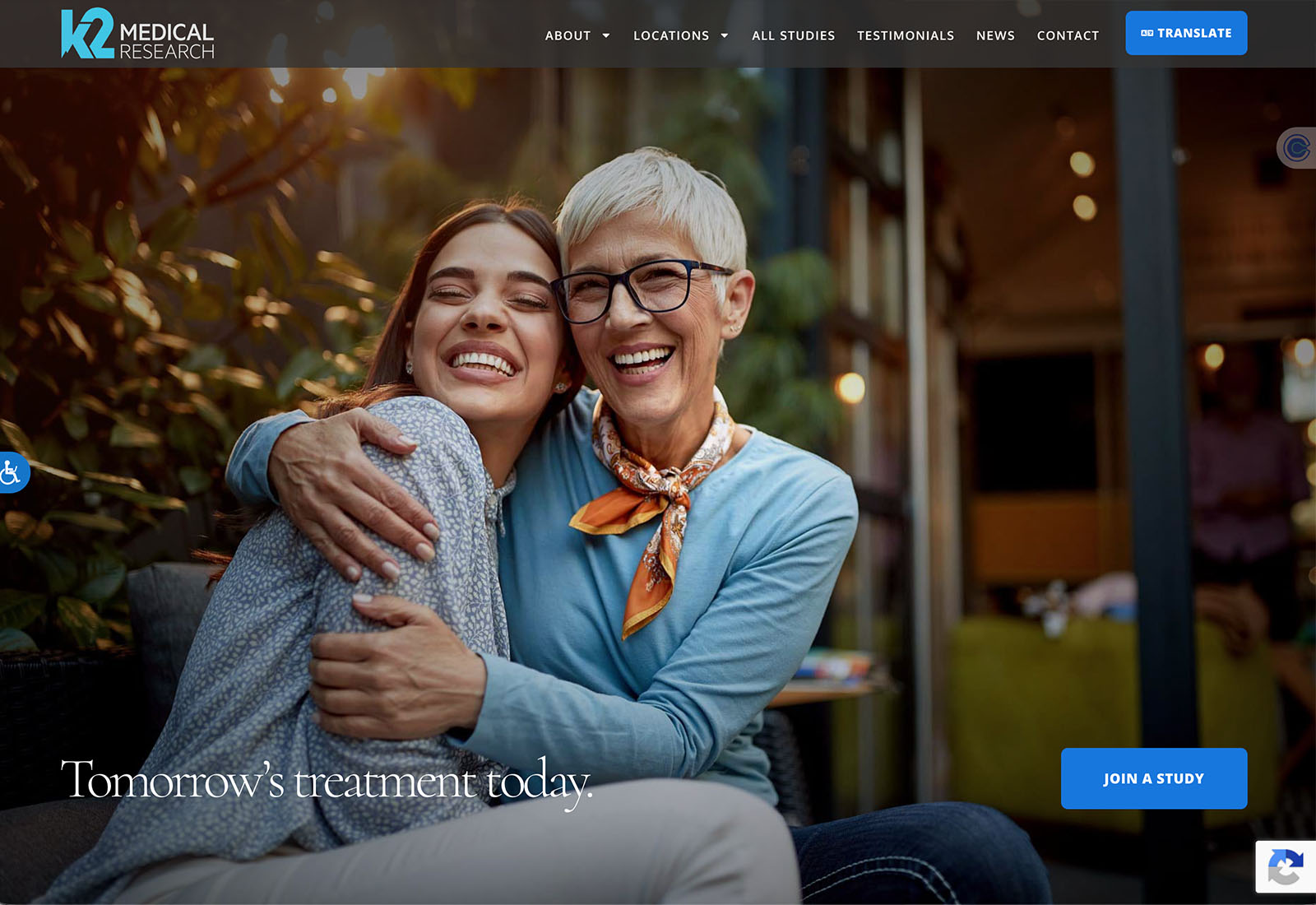
Multi-location architecture exploration
The challenge
K2 was entering a competitive regional market where many clinical research brands felt cold, transactional, or visually interchangeable. The business needed a system that could scale across locations while still feeling credible in a highly sensitive healthcare-adjacent space. K2 initially engaged us to develop its corporate identity, but the deeper need quickly proved to be structural: the brand would need to extend across multiple locations, physicians, landing pages, and future markets without losing cohesion at the parent-brand level.
The brief positioned K2 as a more human, inclusive, and forward-looking organization — one focused on connecting patients with the treatments of tomorrow. It also emphasized the need for intrigue, reassurance, and a sense of possibility, framing the brand less as a conventional medical practice and more as a guide at the edge of innovation.
The structural problem
What began as a brand support need was really a systems problem.
K2 needed:
• a scalable location-based identity system that could flex across multiple offices
• a website architecture that could support location-specific pages without losing parent-brand cohesion
• a clearer digital framework for participants, physicians, and partners
• a more organized way to manage location branding as the network grew
The first challenge was extending the existing K2 identity across locations in a way that stayed consistent at the parent-brand level. The location-based logo system created a clearer framework for how individual offices could be represented without breaking the broader K2 brand.
As the work expanded, it became clear that the website needed to solve the same problem structurally. K2 was not building for one office. It needed a digital system that could support local pages, location-specific navigation, and future expansion while still keeping the parent brand intact.
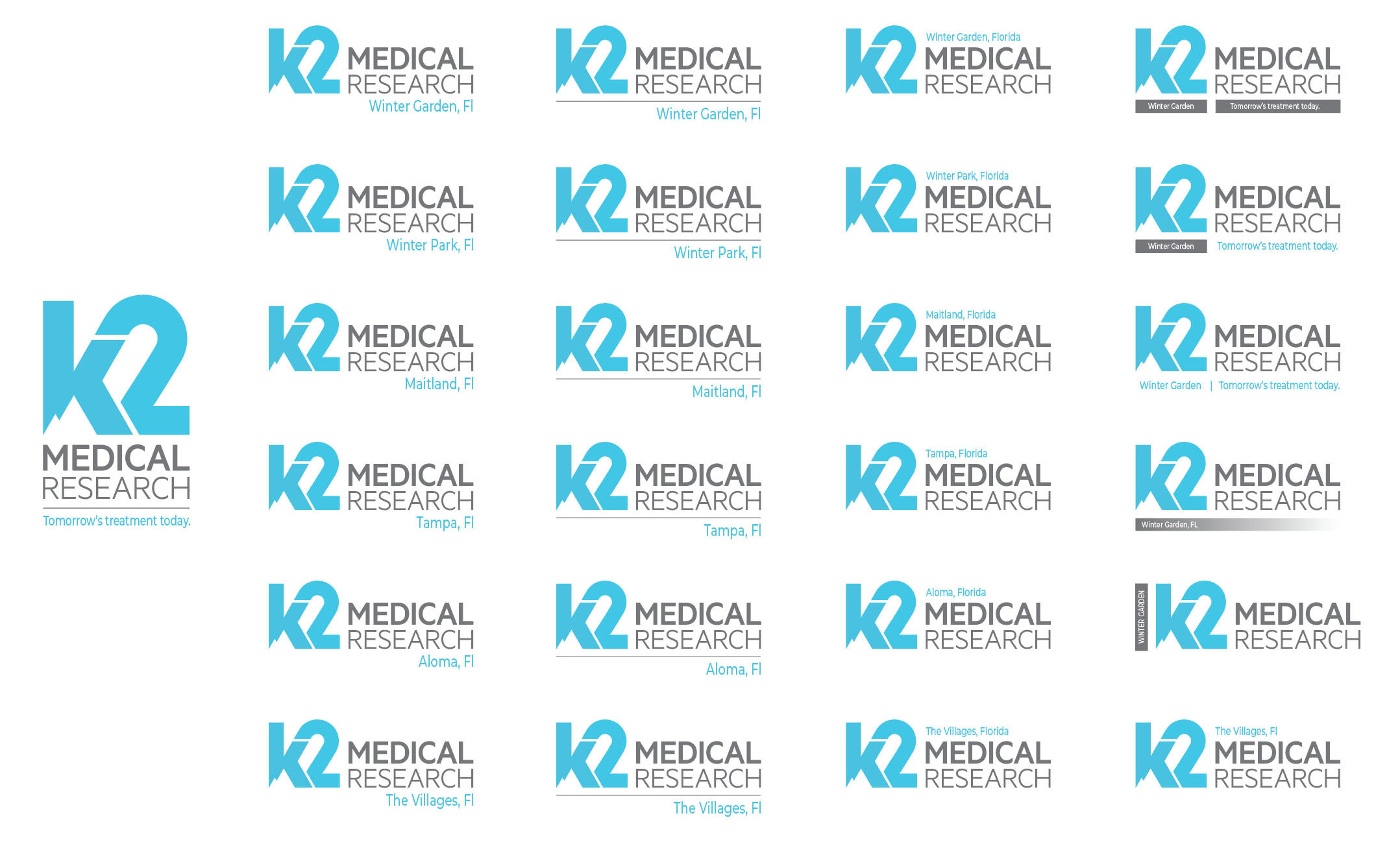
Location-based logo system for extending the parent K2 brand across multiple offices
What we built
We approached the engagement in two connected parts: first by helping extend the existing identity into a location-based brand system, then by shaping a multi-location website architecture to support expansion.
On the brand side, we helped develop a scalable extension of the existing K2 identity system. Rather than creating the original logo, we built a framework for location-specific applications that allowed the parent brand to extend across multiple offices while remaining consistent, recognizable, and easy to manage. The broader engagement also included brand strategy, digital asset organization, and a custom brand folder to help structure the system.
On the digital side, we mapped a website architecture that could support both the parent K2 brand and a growing network of location-specific pages. The later sitemap shows this shift clearly: a main landing page, expandable location pages, location-specific logos, and a navigation system that allowed each location to function like its own subsite while remaining connected to the broader K2 network. To support that, we created a parent-brand return bar above the location-specific navigation — giving each location a more local, self-contained experience without losing the connection back to the main K2 site.
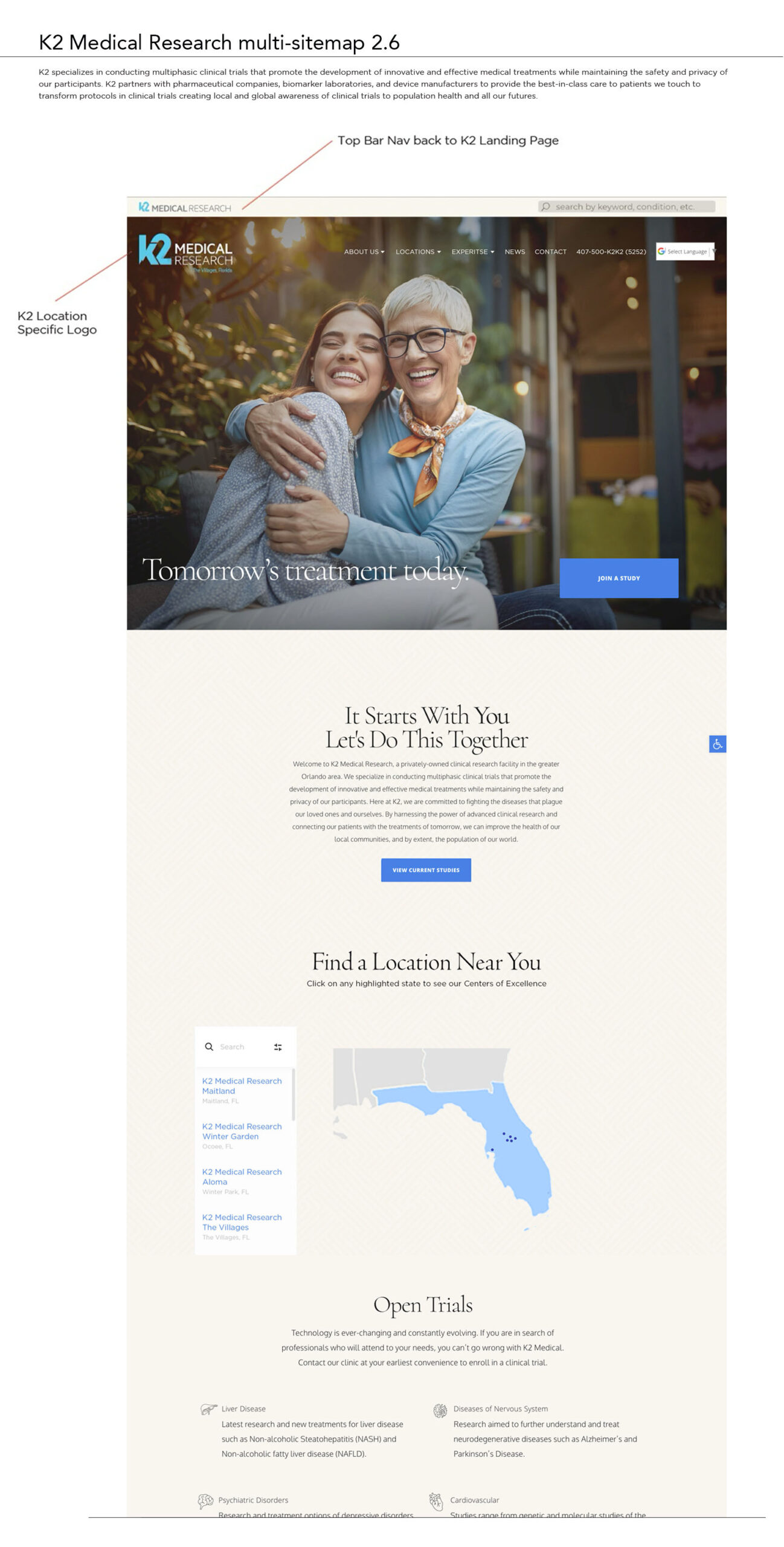
Final sitemap showing parent-brand return logic, location-specific branding, and a scalable multi-location page structure
Why it mattered
This work gave K2 a stronger foundation for growth.
Instead of treating each location as a separate branding problem, the system created a framework for extension. Instead of forcing the website to function like a single-site brochure, the architecture was planned to handle expansion, local relevance, and brand consistency at the same time. The result was a clearer, more scalable system for managing both the parent brand and its growing network of location-specific experiences.
Result
K2 gained:
• a stronger location-based extension of the existing brand
• a more scalable foundation for multi-location growth
• a website architecture designed for location-based expansion
• a clearer framework for managing location branding, local pages, and future additions
The result was not a new master logo. It was a more usable system — one designed to make growth easier, clearer, and more coherent over time.
What began as a corporate identity engagement became a larger location-based brand system and website architecture effort designed to support multi-location growth.
ENGAGEMENT ENTRY POINT
Start with a Brand Diagnostic
If your brand needs to scale across locations, teams, or channels, we help identify the structural issues first — then build the system to support growth.